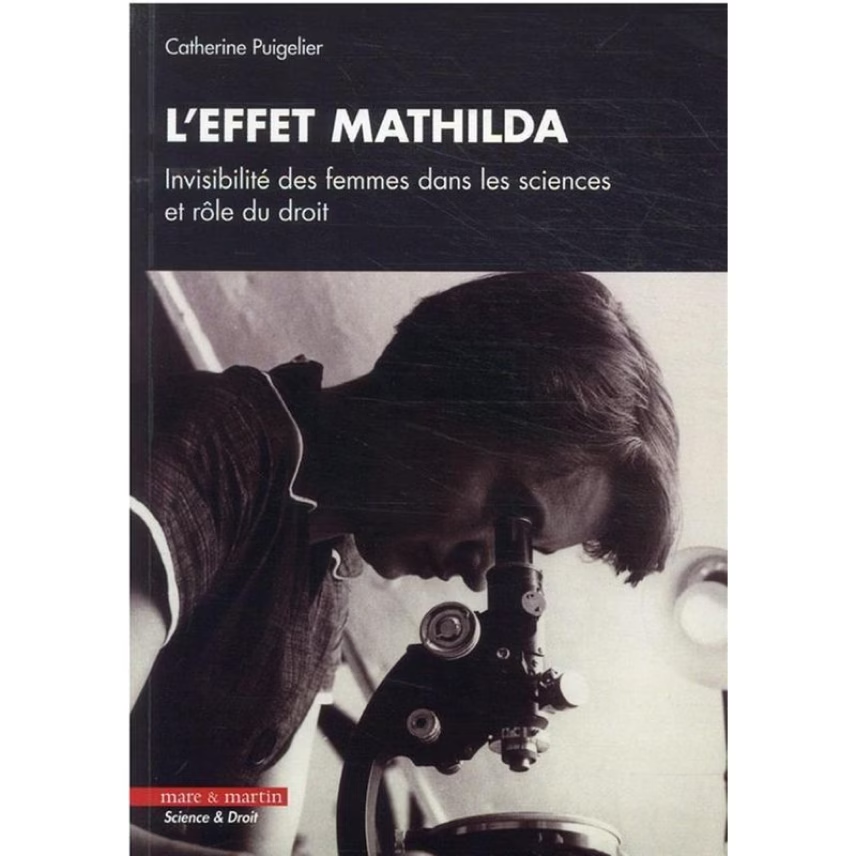
Why are so many women scientists erased from textbooks and awards?
The book “The
Matilda Effect: The Invisibility of Women in Science and the Role of Law” explores this question.
It shows how law and academia have perpetuated bias — and how they can now help correct it.
When science forgets its pioneers
The book opens with a chilling observation: despite their essential role in
research, women have often been dispossessed of their discoveries. The expression "Matilda effect"
summarizes this phenomenon: the attribution of scientific merit to a man rather than to the woman
who is at its origin.
The book cites famous examples like Rosalind Franklin, eclipsed by Watson
and Crick for the discovery of DNA, Marthe Gautier, discoverer of the chromosome of trisomy 21, and
of course Jocelyn Bell Burnell, whose name was forgotten during the Nobel for pulsars.
Each
illustrates the same invisibilization mechanism.

Law as a mirror and tool for change
The authors of the book explain that law, as a social construct, has long
reproduced gender biases: limited access to higher education, unequal recognition in institutions,
or lack of parity in research bodies.
But the book also highlights an optimistic perspective:
law can correct these injustices. Through professional equality policies, recognition mechanisms
(such as awards or academic nominations), and targeted legal actions, the system can become a
visibility driver.
“To make visible is already to do justice. “ — Excerpt from the book
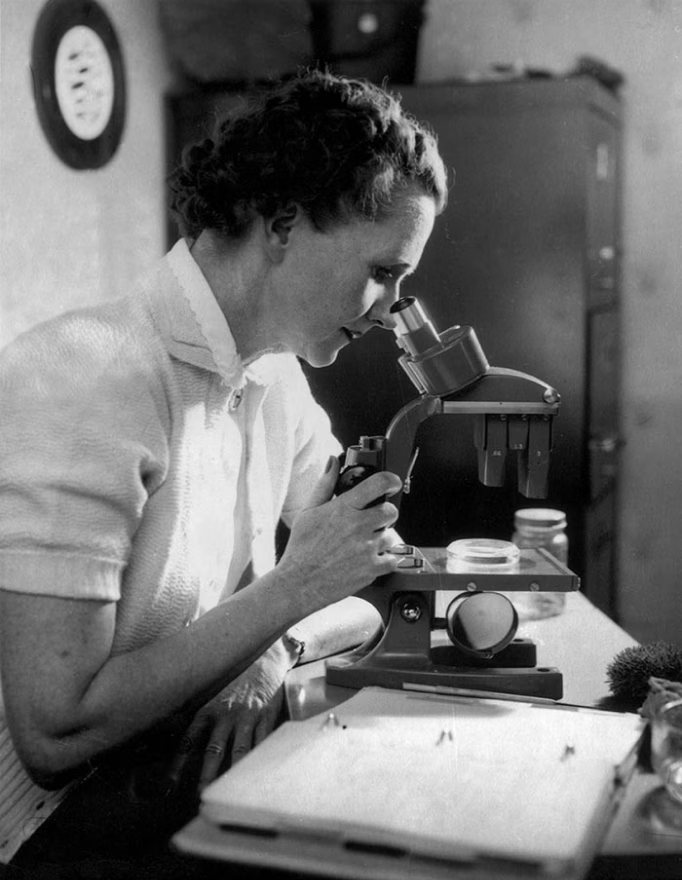
The role of institutions and collective memory
The Matilda effect is not only based on law, but also on scientific and media culture. The book denounces how textbooks, media or museums have erased female contributions, participating in an exclusively masculine narrative of science.
By Valentin DEROO, student in MMI Published on 20/10/2025