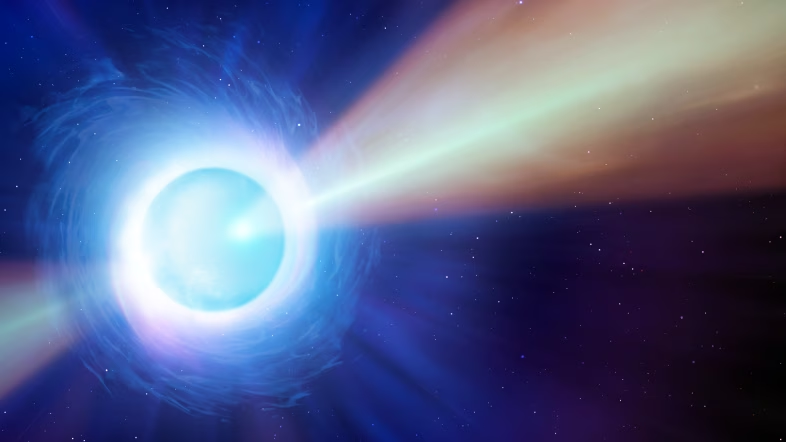
In 1967, at just 24, Jocelyn Bell Burnell detected a strange, rhythmic
signal in the sky.
Not alien — but pulsars, dead stars spinning at incredible speed.
A
discovery that opened a new window into the Universe.
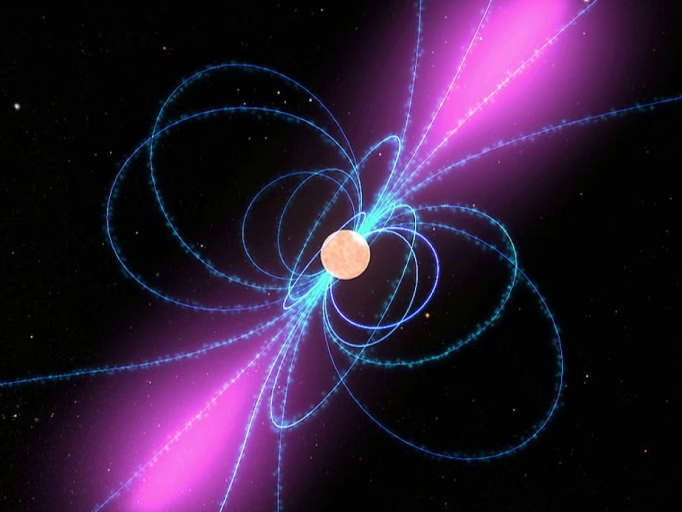
Schéma of a pulsar
A signal defying logic
Studying Cambridge telescope data, she noticed a pattern repeating every 1.337
seconds — perfectly regular.
After ruling out errors, she realized she’d found something
extraordinary.
"It was so precise that some thought it was extraterrestrial. We even called it ‘LGM-1’ for Little Green Men.” — Jocelyn Bell Burnell
When stars die, they spin
Pulsars are neutron stars, remnants of massive stars gone supernova.
They
emit beams of radio waves — cosmic lighthouses sweeping across space.
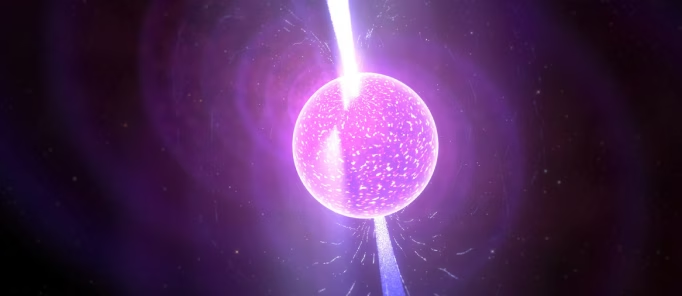
Neutron star
The star that revived science
Pulsars became cosmic clocks, used to test relativity and time itself.
All thanks to the perseverance of a young woman who refused to overlook a detail.
By Valentin DEROO, MMI student
Published on 20/10/2025