The documentary The Silent Pulse of the Universe does justice to Jocelyn Bell Burnell, the astrophysicist who discovered pulsars but whose name was erased from the 1974 Nobel Prize. Through archival footage, interviews and a sensitive staging, the film rehabilitates a woman long remained in the shadow of the stars.
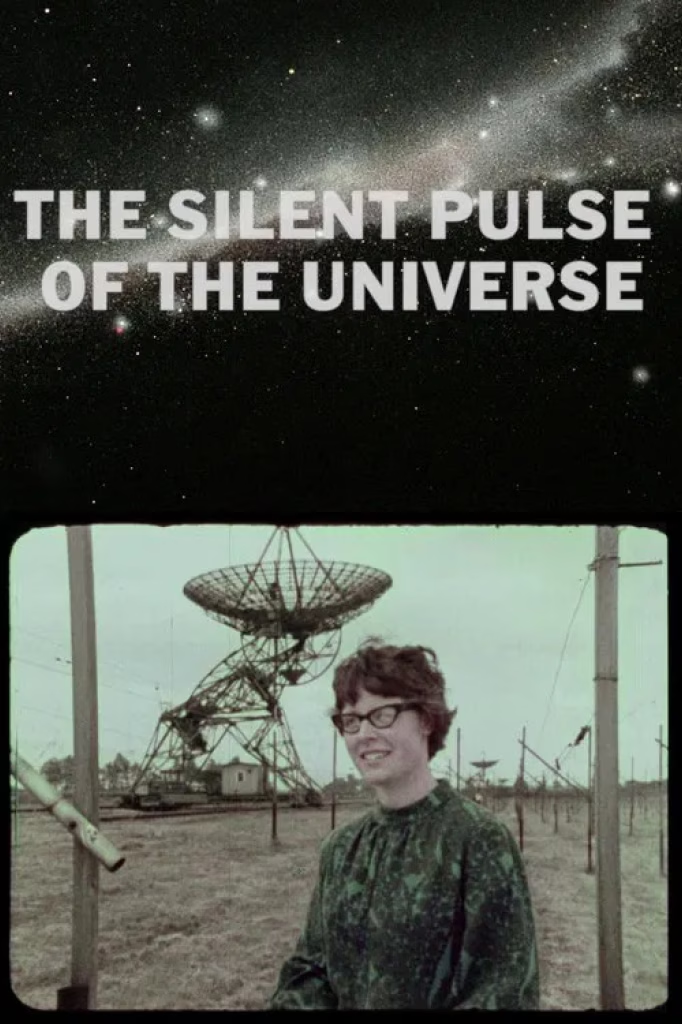
movie poster « The silent pulse of the universe »
A story of listening and injustice
Directed by Ben Proudfoot, this short documentary looks back at one of
the greatest paradoxes of modern science: how a young 24-year-old researcher, author of a
revolutionary discovery, could be forgotten at the time of global recognition.
The film begins
with archive footage from 1967. We see Jocelyn Bell, focused, leaning over the kilometers of
graphics from the Cambridge radio telescope. Her voice-over, calm and determined, guides the viewer
through the mysterious signals she has deciphered: pulsars, these dead stars with beating hearts.
“I wasn’t supposed to find out something this big. I was just supposed to learn how to observe.” — Jocelyn Bell Burnell (excerpt from film)
A film that repairs the silence
The film does not content itself with telling an injustice: it
symbolically corrects it. By his delicate staging and his intimate tone, Ben Proudfoot makes Bell
Burnell the narrator of his own story. The spectator discovers a lucid, funny and inspiring woman,
who has chosen modesty where others would have cried injustice.
The montage alternates between
scientific images and current testimonies. The ethereal music of Joshua Moore accompanies this
rediscovery with a voice too long muted.

Picture of Jocelyn in his office
The Matilda effect on the screen
The documentary perfectly illustrates the Matilda effect: this phenomenon where the merit of a woman scientist is attributed to a man. By giving the floor to Jocelyn Bell Burnell, the film restores the confiscated memory. It is no longer the story of an injustice, but that of a reappropriation.
“The stars don’t care who discovers them, but we, we should. ` — Voiceover in the movie
This message resonates beyond science: it talks about recognition, memory, and the need to rewrite History with all its voices.
By Valentin DEROO, student in MMI Published on 20/10/2025